
Introduction
So, you’ve decided to take up bass fishing? You’re in for an incredible journey. Bass are among the most exciting, hard-fighting, and accessible fish in the United States. Whether you’re fishing a local farm pond or a massive reservoir, the thrill of that first “thump” on your line is something you’ll never forget.
However, for many beginners, the world of bass fishing can feel overwhelming. Which rod do I need? What’s the best lure? Where do the fish hide?
Don’t worry. You don’t need a professional bass boat or a $500 setup to be successful. Here are 5 essential tips to help you stop guessing and start catching.
1. Focus on “Cover” and “Structure”
Bass are ambush predators. They rarely swim in open, empty water. Instead, they hide near things.
- Cover: Look for lily pads, fallen trees (laydowns), docks, and thick grass. Bass hide here to stay cool and surprise their prey.
- Structure: This refers to the bottom of the lake. Look for points, drop-offs, or where a sandy bottom turns into rocks.
Pro Tip: If you find a spot where two types of cover meet (like a dock next to a weed line), that’s a “bass magnet.”
2. Keep Your Gear Simple
One of the biggest mistakes beginners make is buying a “baitcasting” reel too early. They are prone to tangles (backlashes) that can ruin your day.
- Start with a Spinning Combo: A 6’6” or 7’0” medium-power spinning rod is the most versatile tool in your arsenal. It’s easy to cast and can handle almost any bass lure.
- Line Choice: Use 10lb or 12lb monofilament. It’s affordable, easy to knot, and very forgiving for new anglers.
3. Master the “Texas Rig” First
If you could only use one lure for the rest of your life, many pros would choose a soft plastic worm rigged “Texas style.”
Why? Because it’s weedless. You can throw it into the thickest grass or wood where the big bass hide without getting snagged. It’s the ultimate confidence builder for beginners.
4. Fish the “Golden Hours”
Bass are most active when the light is low.
- Sunrise and Sunset: This is when bass move into shallower water to hunt.
- Cloudy Days: On overcast days, bass feel safer and will roam further from cover, making them easier to catch with moving baits like spinnerbaits or crankbaits.
5. Watch Your Line, Not Just Your Rod
Many beginners wait to “feel” a massive pull on the rod. But often, a bass will pick up your lure and swim toward you, or just hold it still.
The Secret: Watch where your fishing line enters the water. If you see the line “twitch,” jump, or start moving sideways, SET THE HOOK!
Ready to Take Your Bass Fishing to the Next Level?
These tips are just the beginning. If you want to truly master the basics and know exactly what gear to buy without wasting money, we have something special for you.
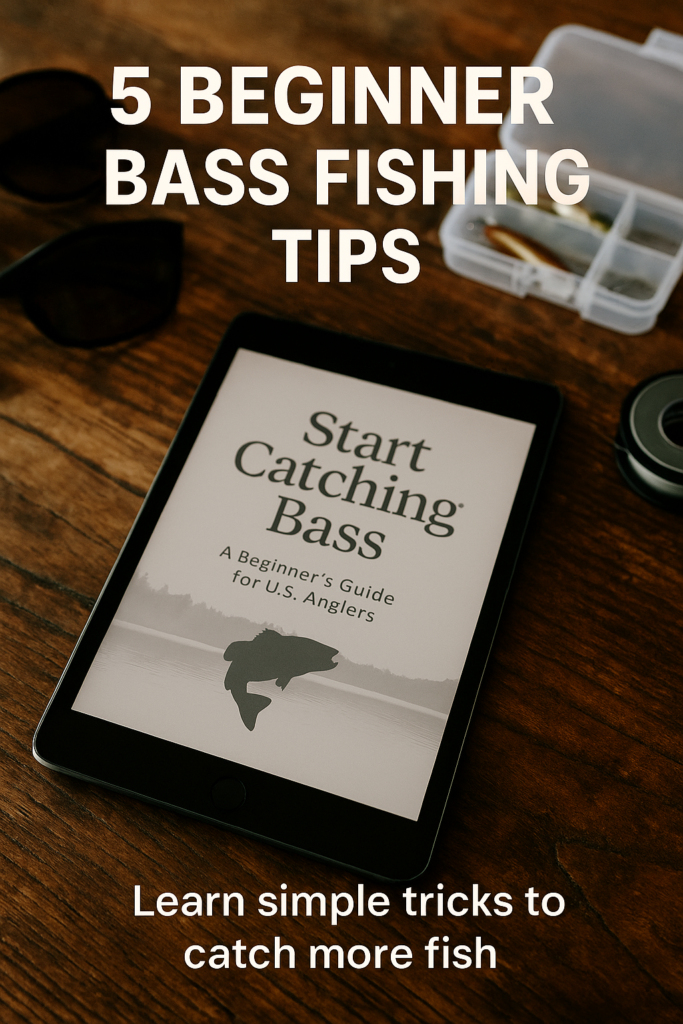
📥 GET Our FREE Guide: “Start Catching Bass”
( by completing the form that will appear at the top in a few seconds. Or Click Below )
We’ve put together a complete, easy-to-follow PDF guide specifically for U.S. anglers. Inside, you’ll find:
- A complete gear checklist (Rods, Reels, and Lines).
- The Top 10 Best-Selling Lures on Amazon that actually catch fish.
- Step-by-step tutorials on the Texas Rig and other winning techniques.
Explore More:
- Best Bass Fishing Lures (2026): Top Picks for Largemouth & Smallmouth
- Bass Terminal Tackle Checklist: Hooks, Weights, and Rigs (2026)
- Best Bass Fishing Line (2026): Braid vs. Fluoro vs. Mono
- Start Bass Fishing for Under $100: Essential Amazon Gear for Beginners
- Common Mistakes Beginners Make When Fishing for Bass: Why Anglers Lose Their Catch